Even the teachers help the girls to paint up! There is lots of laughing and fun as we learn!
Play Video
Different colours are used to decorate the body.
→
Traditionally ochre, ash and other natural materials were used for the body paint.
←
Twigs (parka) are still used to apply the Walka (body markings) to the body.
→
The white stripe across the nose is the design for women and girl performers.
←
Traditionally ochre, ash and other natural materials were used for the body paint.
Traditionally ochre, ash and other natural materials were used for the body paint.
Different colours are used to decorate the body.
The white stripe across the nose is the design for women and girl performers.
The white stripe across the nose is the design for women and girl performers.
Twigs (parka) are still used to apply the Walka (body markings) to the body.
The girls perform the Inma that they learned for Walinya.
Play Video
The girls perform the Inma that they learned for Walinya.
The boys get painted up to prepare for more Inma.
Play Video
The Puturu (headband) is finished.
→
Troy teaches the boys how to put the Puturu (headband) together winding the wool around the fingers.
←
Troy puts the headband on which is tied at the back of the head. →
The headband is now ready to put on.
←
Troy teaches the boys how to put the Puturu (headband) together winding the wool around the fingers.
Troy teaches the boys how to put the Puturu (headband) together winding the wool around the fingers.
The Puturu (headband) is finished.
The headband is now ready to put on.
The headband is now ready to put on.
Troy puts the headband on which is tied at the back of the head.
Play Video
Click here to hear Wati Kanyala in English.
In this boys Inma, Wati Nyiru is still following the women.
Play Video
In this boys Inma, Wati Nyiru is still following the women.
The boys are holding long wool that represents a rainbow (Tjutiranngu).
→
The boys are preparing for the Inma.
←
As the boys dance, they move towards the singers. This is how Inma is always performed. →
The boys are holding long wool that represents a rainbow (Tjutiranngu).
←
The boys are preparing for the Inma.
The boys are holding long wool that represents a rainbow (Tjutiranngu).
The boys are holding long wool that represents a rainbow (Tjutiranngu).
As the boys dance, they move towards the singers. This is how Inma is always performed.
Naomi Douglas, Traditional Owner and Cultural Custodian of Walinya (Cave Hill) tells us The Seven Sisters Story that was told to her when she was young.
We are very lucky to have Naomi share with us the story!
Play Video
Naomi Douglas, Traditional Owner and Cultural Custodian of Walinya (Cave Hill) tells us The Seven Sisters Story that was told to her when she was young.
We are very lucky to have Naomi share with us the story!
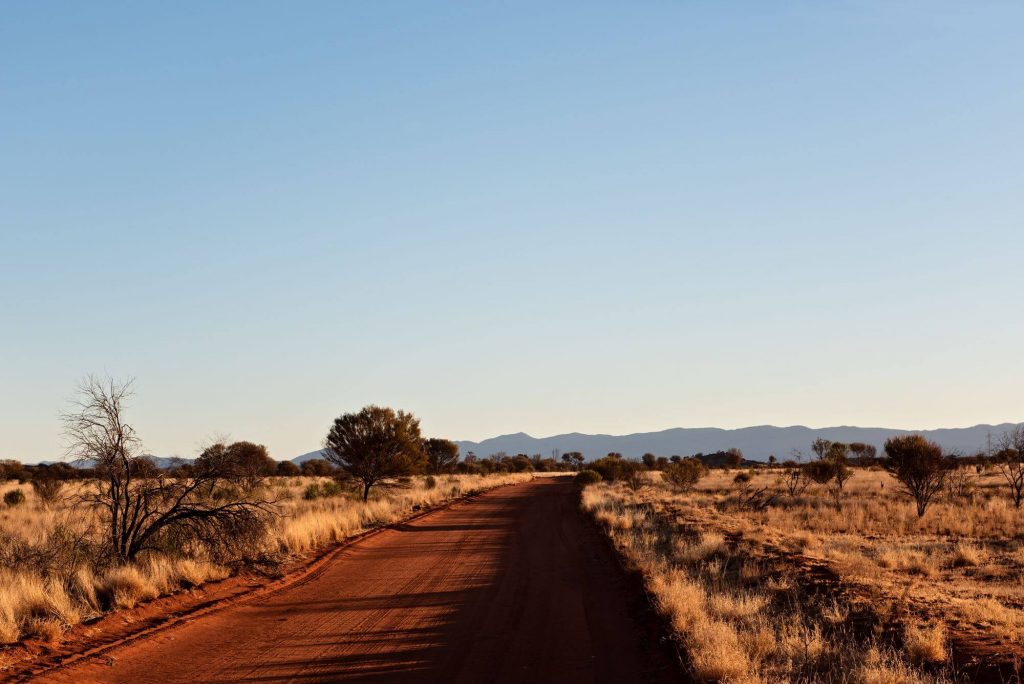
The road to Walinya (Cave Hill).
The road to Walinya (Cave Hill).
DID YOU KNOW?
If you stood at the top of Walinya (Cave Hill) you can see Uluru and Atila.
DID YOU KNOW?
You too can visit Walinya (Cave Hill) by joining one of the Anangu organised tours through Desert Tracks Tours.
DID YOU KNOW?
If you stood at the top of Walinya (Cave Hill) you can see Uluru and Atila.
DID YOU KNOW?
You too can visit Walinya (Cave Hill) by joining one of the Anangu organised tours through Desert Tracks Tours.
This large rock at the entrance of Walinya symbolises “Nampa” – Wati Nyiru’s companion in the story.
Play Video
DID YOU KNOW?
Rock art is the oldest art form in Australia. Some Aboriginal rock art is more than 30,000 years old.
DID YOU KNOW?
Rock art is the oldest art form in Australia. Some Aboriginal rock art is more than 30,000 years old.
The rock art inside of Cave Hill tells the epic story of the Seven Sisters Tjukurpa.
The rock art inside of Cave Hill tells the epic story of the Seven Sisters Tjukurpa.
Claymation video about the Walinya part of the Seven Sisters story made by Jonathan Daw and students from Pukatja (Ernabella) school.
Narrated by Inawinytji Williamson.
Play Video
Claymation video about the Walinya part of the Seven Sisters story made by Jonathan Daw and students from Pukatja (Ernabella) school.
Narrated by Inawinytji Williamson.
Some of the rock art inside Walinya (Cave Hill).
→
The outside of Cave Hill (Walinya).
←
The Cave Hill sign on the road outside of Walinya (Cave Hill). →
Some of the rock art inside Walinya (Cave Hill).
←
The outside of Cave Hill (Walinya).
Some of the rock art inside Walinya (Cave Hill).
Some of the rock art inside Walinya (Cave Hill).
The Cave Hill sign on the road outside of Walinya (Cave Hill).